
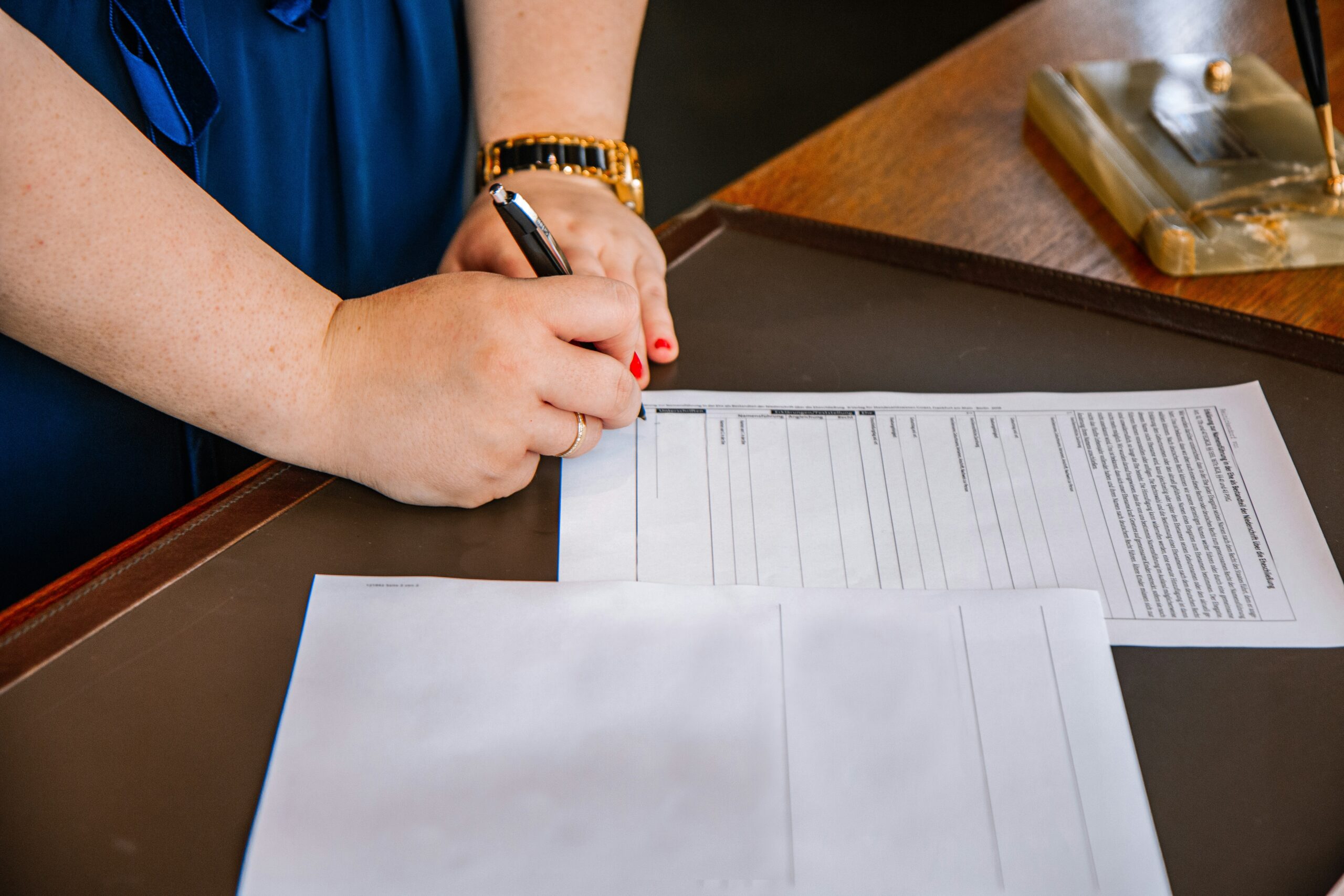
A business in Malaysia recovers an unpaid invoice in five stages: it builds a paper trail that proves the debt, sends a letter of demand, files a claim in the court that matches the amount, applies for summary judgment if the debtor has no real defence, and then enforces the judgment or a written settlement. Each stage depends on the one before, so the documents you keep from the first delivery decide how quickly the later stages move.
This guide takes each stage in turn, for business owners and finance teams, and ends with a simple timeline.
Key takeaways
- In Peninsular Malaysia, a claim for an unpaid invoice must generally be filed within six years from the date payment fell due, under the Limitation Act 1953.
- A written acknowledgment signed by the debtor, or a part payment, restarts that period, and the Federal Court has accepted that an SMS can be such an acknowledgment.
- Claims of up to RM100,000 usually go to the Magistrates' Court, claims of up to RM1 million to the Sessions Court, and larger claims to the High Court.
- Once the debtor has entered appearance, a creditor with clear documents can apply for summary judgment under Order 14 of the Rules of Court 2012.
- An instalment deal should be written and make the whole balance due if any payment is missed.
On this page
- What documents prove an unpaid invoice?
- When should you send a letter of demand?
- Which court hears an unpaid invoice claim?
- How does summary judgment speed up a debt claim?
- How do you make an instalment settlement safe?
- What if the debtor still does not pay after judgment?
- A simple timeline for recovering an unpaid invoice
- Frequently asked questions
What documents prove an unpaid invoice?
An unpaid invoice is proved by documents showing that your customer ordered the goods or services, received them and agreed the price. Gather these before you send any demand:
- the quotation, purchase order or contract, with your terms on credit period, interest and recovery costs
- delivery orders signed and stamped by the customer, or service and completion reports
- the invoices and statements of account, and any balance confirmation the customer signed
- emails, letters and WhatsApp messages in which the customer admits the debt or asks for more time
Admissions matter twice over. They make a later complaint about quality or price harder to believe, and under sections 26 and 27 of the Limitation Act 1953 (Act 254) a written acknowledgment signed by the debtor, or a part payment, restarts the six-year limitation period. In Yam Kong Seng & Anor v Yee Weng Kai [2014] 4 MLJ 478, the Federal Court held that an SMS met these requirements because the sender's phone number identified him.
Check, too, exactly who owes you. A trading name such as ABC Enterprise is often a sole proprietorship registered under the Registration of Businesses Act 1956 (Act 197), so the claim lies against the owner personally, while a Sdn Bhd is a separate company. A search with the Companies Commission of Malaysia (SSM) confirms the correct name, registration number and registered office.
When should you send a letter of demand?
Send a letter of demand once written reminders have failed and before you file anything in court. It is not generally required by law for a debt that is already due, but it is the normal step and can prompt payment or an instalment offer.
The letter should state the amount, how it is made up by invoice number and date, any interest your terms allow, a deadline to pay, commonly 7 to 14 days, and that proceedings will follow without further notice. If your terms fix no interest rate, the court may still award interest on a debt under section 11 of the Civil Law Act 1956 (Act 67).
If the debtor is a company owing more than RM50,000 with no genuine dispute, a statutory notice under section 466(1)(a) of the Companies Act 2016 (Act 777) is another option. It is a different document with serious consequences: if the company does not pay within 21 days, it is deemed unable to pay its debts and can face a winding-up petition. Businesses with many overdue accounts can read our corporate debt recovery guide.
Which court hears an unpaid invoice claim?
The court is chosen mainly by the amount claimed. Under the Subordinate Courts Act 1948 (Act 92), a First Class Magistrate hears claims of up to RM100,000 and the Sessions Court claims of up to RM1 million; larger claims go to the High Court.
| Amount claimed | Usual court | Points to note |
|---|---|---|
| Up to RM5,000 | Magistrates' Court, small claims procedure (Order 93) | Individuals only, no lawyers at the hearing, no appeal |
| Up to RM100,000 | Magistrates' Court | Where a company owed a small sum files |
| Up to RM1 million | Sessions Court | Most mid-sized trade debts |
| Above RM1 million | High Court | Also hears winding-up petitions |
The claim starts with a writ and statement of claim served on the debtor, who has 14 days after service to enter appearance and generally a further 14 days to file a defence. If it does neither, you can enter judgment in default without a trial. For unpaid construction work, adjudication under the Construction Industry Payment and Adjudication Act 2012 (Act 746) may be faster; see our CIPAA adjudication guide.
How does summary judgment speed up a debt claim?
Summary judgment gives you judgment without a full trial when the debtor has entered appearance but has no real defence, so a well-documented claim can finish in months rather than years.
Under Order 14 of the Rules of Court 2012, you apply with an affidavit verifying the debt and stating your belief that there is no defence, and serve it within 14 days of receiving the sealed application. The debtor must then show an issue that ought to be tried. If it cannot, the court gives judgment. If it raises something arguable, the court can give leave to defend, unconditionally or on terms such as providing security.
Common defences are that the goods were defective, the work was incomplete, the amount is wrong or there is a set-off. They carry far less weight when the debtor signed delivery orders, raised no complaint at the time and confirmed the balance. Where the dispute really is about quality or performance, a trial may be needed; see our breach of contract guide.
How do you make an instalment settlement safe?
Agree to instalments only on written terms that make the whole balance payable at once if any payment is missed. A sound agreement includes:
- an acknowledgment of the full amount owed, which also restarts the limitation period
- fixed amounts, due dates and the method of payment
- an acceleration clause, so one missed payment makes the full balance due with interest
- who bears the legal costs incurred so far
- where the debtor is a company, a director as guarantor, if one will sign
Post-dated cheques add pressure, because a dishonoured cheque gives a separate claim on the cheque itself under the Bills of Exchange Act 1949 (Act 204).
If a claim has already been filed, record the settlement as a consent judgment, so that a default can be enforced straight away instead of through a new action on the agreement. Mark settlement proposals without prejudice when you do not want them shown to the court.
What if the debtor still does not pay after judgment?
Enforce against what the debtor actually has, and choose the method to match:
- Money in a bank account, or owed by its customers: garnishee proceedings require the bank or customer to pay you instead.
- Stock, vehicles or equipment: a writ of seizure and sale lets the court bailiff seize movable property and sell it by public auction.
- An individual with income but few visible assets: a judgment debtor summons under the Debtors Act 1957 (Act 256) brings the debtor to court to be examined on their means, and the court can order instalments.
- A company: a section 466(1)(a) notice for a debt exceeding RM50,000, or a winding-up petition once execution is returned unsatisfied under section 466(1)(b).
- An individual, including a sole proprietor or partner, with a judgment debt of at least RM100,000: bankruptcy under the Insolvency Act 1967 (Act 360), starting with a bankruptcy notice that gives 7 days to pay. Budget 2027, tabled on 9 October 2026, announced a rise to RM150,000 from 2027, but that change is not yet law.
Unless another rate was agreed, a judgment debt carries interest at 5% a year under Order 42 rule 12 of the Rules of Court 2012. Act promptly: once six years have passed since judgment, the court's leave is needed to issue execution.
A simple timeline for recovering an unpaid invoice
The statutory periods below are fixed; the other timings depend on the debtor and the court's calendar.
| Stage | What happens | Time guide |
|---|---|---|
| Invoice falls due | Limitation starts to run | Six years to file a claim |
| Reminders | Written chasers and a statement of account | Set by your credit policy |
| Letter of demand | Formal demand with a deadline | Commonly 7 to 14 days |
| Claim filed | Writ and statement of claim served | Writ valid for six months for service |
| Appearance and defence | Debtor must respond | 14 days to appear, then generally 14 days to defend |
| Judgment | Default, summary judgment or trial | Default soon after the deadlines pass; Order 14 usually a few months; trial longer |
| Enforcement | Garnishee, seizure and sale, debtor summons, winding up or bankruptcy | 21 days under a s 466 notice; 7 days under a bankruptcy notice |
The early stages are the ones you control. A prompt demand, a claim filed soon after the deadline and documents ready for an Order 14 application put you in a far stronger position than waiting.
Frequently Asked Questions
How long does it take to recover an unpaid invoice in Malaysia?
Recovering an unpaid invoice in Malaysia can take from a few weeks to more than a year. Some customers pay within the 7 to 14 days given in a letter of demand. If the debtor ignores a court claim, default judgment can follow soon after the 14-day deadlines pass. A summary judgment application usually takes a few months, a defended trial longer, and enforcement adds further time.
Can I charge interest on an unpaid invoice in Malaysia?
Yes, if the rate was agreed, for example in the quotation, contract or credit terms the customer accepted before supply; a rate first printed on the invoice may be disputed. Without an agreed rate, a Malaysian court may still award interest under section 11 of the Civil Law Act 1956. After judgment, a judgment debt carries interest at 5% a year unless another rate was agreed.
What is the time limit to sue for an unpaid invoice in Malaysia?
In Peninsular Malaysia, a claim for an unpaid invoice must generally be filed within six years from the date payment fell due, under section 6 of the Limitation Act 1953. A written acknowledgment signed by the debtor, or a part payment, restarts the period, and in 2014 the Federal Court accepted that an SMS can count. Sabah and Sarawak have their own limitation laws.
Can a company use the small claims court in Malaysia?
A company cannot use Malaysia's small claims procedure. Under Order 93 of the Rules of Court 2012, it is only for individual claimants with claims of up to RM5,000, who present their own cases without lawyers at the hearing. A company owed RM5,000 or less files an ordinary claim in the Magistrates' Court, which hears claims of up to RM100,000; larger claims go to the Sessions Court or the High Court.
Should I accept instalments from a customer who owes me money in Malaysia?
Instalments can make sense if the customer genuinely cannot pay at once, but in Malaysia the arrangement should be written, acknowledge the full debt, fix the amounts and dates, and make the whole balance due if any payment is missed. If a court claim has already been filed, record the arrangement as a consent judgment so that a default can be enforced at once.
Need advice on your own situation?
Every case turns on its own facts and documents. Our lawyers in Puchong and Mont Kiara advise once we have reviewed your documents at a consultation, online or in person.
Related reading
This article is general information on Malaysian law as at October 2026 and is not legal advice. Laws and procedures change, so please seek advice on your own facts before acting.
