MaxineKhoo

什么是不公平解雇?马来西亚员工必须了解的职场法律保护(详解Section 20)

在马来西亚,解雇员工并非雇主的“随意决定”,而是受到《1967年工业关系法令》(Industrial Relations Act 1967)严格规管。根据该法令第20条(Section 20),若员工被雇主以无正当理由解雇,即构成不公平解雇(Unfair Dismissal),员工有权依法提出申诉,寻求复职或赔偿。尽管许多员工在遭遇突如其来的解雇后感到无助,但了解相关法律条文与程序,是保障自身合法权益的第一步。
一、不公平解雇的定义与常见形式
所谓“不公平解雇”,是指雇主在没有**正当理由(Just Cause)或未遵循正当程序(Due Inquiry)**的情况下,单方面解除与员工之间的雇佣关系。根据工业法庭的多项裁决,不公平解雇包括但不限于以下情形:
1. 无解释或通知即被解雇:员工被口头或书面通知即刻离职,但雇主并未提供解雇理由或证据。
2. 纪律处分程序不完整:即使存在某种违规行为,雇主也未给予书面警告、调查或申诉机会。
3. 绩效评估不透明:以“绩效差”为由开除员工,但缺乏量化标准或没有正式评估记录。
4. 滥用试用期或合约条款:以试用期为借口规避程序性正义,例如未提供培训或目标却解雇员工。
5. 带有歧视或报复性质的解雇:员工因投诉性骚扰、申请病假、参与工会活动或报告职场不当行为而被“秋后算账”。
在马来西亚,所有员工(包括合同工、临时工与试用期员工),只要受雇关系确立,均享有《工业关系法令》下的不被任意解雇的保护。
二、《1967年工业关系法令》第20条(Section 20, IRA 1967)详解
Section 20 是马来西亚劳工法中最常被引用的条文之一。该条款明确规定:“任何雇员若认为自己遭到不公平解雇,有权在解雇之日起60天内,向工业关系局提出申诉。”
此申诉程序的基本流程如下:
• 第1步:提交投诉
员工必须填写并提交“Section 20 表格”,列明被解雇的日期、理由以及不服的原因,连同相关证据(如解雇信、电邮记录等)。
• 第2步:协调会议(Conciliation Meeting)
工业关系局会召集雇主与雇员进行协调,尝试达成和解,避免进入诉讼程序。
• 第3步:提交工业法庭
若协调失败,案件将由人力资源部长决定是否提交工业法庭审理。若进入法庭程序,将由法官审查证据,并裁定是否构成不公平解雇。
重要提示:员工必须在60天内提出申诉,逾期将可能失去救济机会。因此,任何被解雇的员工应立即咨询律师,避免错失法律窗口。
三、真实案例解析:不公平解雇如何界定?
以下是两个具代表性的案例,有助于理解马来西亚法院如何判定解雇是否公正:
案例一:没有绩效记录却指控员工“表现差”
某技术员在公司任职两年,因业务重组被解雇。雇主声称其表现不达标,但无法出示年度评估记录、警告信或改善计划。工业法庭裁定雇主未提供“正当理由”,违反程序正义,判雇主赔偿员工12个月工资。
案例二:试用期员工投诉职场霸凌被解雇
一名试用期行政人员在向管理层举报同事霸凌后数日,被通知“不适合公司文化”而被解雇。工业关系局认定此为“报复性解雇”,转介至法庭审理后,最终雇主同意支付6个月薪资作为和解金。
此类案例显示,即使是试用期员工,也享有劳动法律保护,不得任意解雇。
四、雇主必须遵循的解雇程序
根据马来西亚劳工法律规定,合法解雇必须具备两个条件:
1. 正当理由(Just Cause):如员工严重违纪、持续绩效不达标、组织结构重组等。
2. 正当程序(Due Process):包括给予员工解释机会、发出警告信、进行内部调查(Domestic Inquiry)等。
若雇主跳过上述程序,即使理由“听起来合理”,也可能因程序瑕疵被判违法。
五、如果您怀疑自己被不公平解雇,应怎么做?
如果您怀疑自己遭遇了不公平解雇,请立刻采取以下步骤:
• 收集证据:包括书面解雇通知、电邮、聊天记录、绩效报告、同事证词等。
• 保持冷静并保留沟通记录:切勿情绪性辞职或冲突回应。
• 在60天内申诉:向工业关系局提出Section 20投诉。
• 咨询专业律师:尤其在涉及歧视、骚扰、假裁员等复杂情况下。
本律所建议任何收到解雇信的员工,都应在第一时间进行法律咨询,评估解雇是否合规,并探索复职、赔偿或和解选项。
六、总结:知法懂权,捍卫职场尊严
不公平解雇是马来西亚劳资关系中常见却被低估的问题。许多员工因不了解《工业关系法令》第20条的申诉机制,而放弃维权机会。反之,雇主若未遵守法律程序,则可能面临高额赔偿与声誉损失。了解与应用相关法律,不仅能保障员工的基本权益,也有助于企业建立合法、透明的人力资源管理体系。
若您或您的家人、同事正在经历疑似不公平解雇,欢迎联系本律所。我们专注于马来西亚劳工法事务,致力于为员工提供明确、实用与具策略性的法律建议。

什么是不公平解雇?马来西亚员工必须了解的职场法律保护(详解Section 20) Read More »

Company Takeovers and Legal Control: Understanding Injunctions and Boardroom Disputes Under Malaysian Law

In Malaysia, the control of a company’s board of directors is a matter governed by both corporate governance procedures and statutory protections under the Companies Act 2016 (CA 2016). When disputes over control arise—especially in public or private companies with competing shareholders—resorting to legal remedies such as injunctions may be the only way to prevent unlawful takeovers or corporate sabotage.

A recent High Court case highlighted the power and importance of interlocutory injunctions in halting unauthorized boardroom moves and preserving the integrity of a company pending a full trial. The case involved a situation where one group of shareholders attempted to assert control over the company by appointing their own directors, allegedly without complying with the constitution or the Act. The aggrieved party, claiming to be the rightful controller of the company, sought an urgent court order to stop what they called a “corporate hijack.”

Legal Framework for Director Appointments and Removals
Under Section 206(1) of the Companies Act 2016, a company may remove a director before the expiration of their term by ordinary resolution, unless the company’s constitution provides otherwise. Additionally, Section 208(2) mandates that directors must exercise their powers in good faith and in the best interests of the company. Any decision made in breach of this duty can be challenged in court.

In the dispute, the opposing party claimed to have lawfully removed and replaced directors via written resolutions. However, the court scrutinized whether proper notice was given, whether meetings were validly held in accordance with Section 310 (which governs notice of general meetings), and whether any procedural irregularity invalidated the appointments under Section 212 of CA 2016.

Importantly, where there is evidence that one party is attempting to bypass legal procedures or manipulate shareholding records to seize control, the court can step in by issuing an injunction under the Rules of Court 2012, guided by the equitable principles laid out in the landmark case of American Cyanamid Co v Ethicon Ltd [1975] AC 396.

Injunctions: The Court’s Protective Tool
In Malaysian corporate law, injunctions are granted to prevent irreparable harm where legal remedies (like damages) are insufficient. Courts typically assess three key criteria:

Whether there is a serious issue to be tried,

Whether damages would be an adequate remedy, and

Whether the balance of convenience favors granting the injunction.

In the case in question, the High Court found that the applicant had raised substantial issues—including the alleged abuse of company procedures, possible document fabrication, and threats to company operations. The court noted that the company was publicly listed, making the potential harm to shareholders and market perception particularly severe.

The court also rejected arguments that the matter was “purely private,” clarifying that when the functioning of a company’s board is in dispute and there is a risk of breach of fiduciary duties, judicial intervention is warranted. The court referred to Section 210 of the Companies Act, which requires directors to avoid conflicts of interest and act honestly in their dealings.

Company Constitutions and Shareholder Consent
Many such boardroom battles arise from a failure to comply with the company’s constitution. For instance, a constitution may specify:

Minimum number of directors (often two, as in many private companies),

Procedures for calling meetings and passing resolutions,

Quorum requirements under Section 328,

Share transfer restrictions (especially for pre-emption rights).

Where any of these provisions are violated, the court may declare board decisions invalid and order reinstatement of previously removed directors, as seen in previous Malaysian cases such as Ng Kae Jeng v Invenpro (M) Sdn Bhd.

Practical Takeaways and Legal Lessons
This case delivers key lessons for company directors, shareholders, and corporate advisers alike. Firstly, power struggles over directorships must follow the law—not just the desires of majority shareholders or management factions. Secondly, even if filings are made with the Companies Commission of Malaysia (SSM), those filings do not create legal validity unless the underlying resolutions comply with the Companies Act and company constitution. Courts have repeatedly emphasized that SSM’s role is administrative, and its acceptance of forms does not validate illegal acts.

Third, and most importantly, where directors or shareholders suspect unlawful removal or board manipulation, they may immediately seek an interlocutory injunction to maintain the status quo. This ensures that control of the company is not unfairly shifted before the court has had the chance to decide the case on its merits.

Conclusion: Legal Strategy Matters in Corporate Control
Boardroom disputes are more than internal politics—they are legal events with major consequences. The Malaysian legal system offers clear tools for preventing abuse, particularly through Sections 206–210 of the Companies Act 2016 and the availability of court injunctions. Whether you’re a shareholder fighting for your rights or a director defending your position, understanding your legal remedies is essential.

Engaging legal counsel early, preserving documentary evidence, and moving swiftly with proper applications can be the difference between protecting a business and losing it to corporate mismanagement or hostile takeover.

Company Takeovers and Legal Control: Understanding Injunctions and Boardroom Disputes Under Malaysian Law Read More »

When a Director is Ousted: What Every Shareholder Must Know About Director Removal in Malaysia

In Malaysia, the removal of a company director can become the spark for corporate battles—especially in private companies where shareholders often wear multiple hats as founders, directors, and business partners. A recent High Court case shines a spotlight on how improperly removing a director, particularly one with equal shareholding, can backfire severely and be deemed oppressive and unlawful under the Companies Act 2016.
This case began with a corporate fallout between two equal shareholders of a private company. The company, long co-managed by both shareholders, suddenly listed one of them as no longer a director. The twist? He had never resigned, never received notice of a general meeting, and was never informed of any resolution being passed for his removal. The discovery came not through official channels, but from a bank officer who informed him that he was no longer listed as a director.
Unbeknownst to him, a new company secretary had been appointed just a day before the so-called resignation, and that secretary proceeded to change the company’s registered address to his own office. A false notification of the director’s “resignation” was lodged with the Companies Commission of Malaysia (CCM) under Section 58, effectively erasing him from company records without following due process.
This led to a court battle, where the removed director sought reinstatement under Section 346 of the Companies Act 2016—Malaysia’s statutory safeguard against shareholder oppression. He also requested that the appointment of the new company secretary be nullified, and that the correct company address and board structure be restored.
The High Court examined whether the removal followed legal procedures under Sections 206 and 322 of the Companies Act. It found that no special notice was given, no shareholders’ meeting was held, and no ordinary resolution was passed. All these steps are legally mandatory before a director can be removed in a private company. A mere filing with CCM—without shareholder consent or notice—is not legally sufficient to oust a director.
Importantly, the court reaffirmed that CCM’s system is based on self-declarations. The Commission does not verify filings; it assumes that the information submitted by a company secretary is true. Therefore, using the Commission’s registration system to give the appearance of a legitimate removal does not cure a breach of procedure.
Further compounding the issue was the fact that the company’s constitution required a minimum of two directors, which was violated if one of the 50% shareholders was removed. The court held that these actions, including the denial of access to the company email and the rushed appointment of a new company secretary without board approval, amounted to a pattern of oppressive conduct aimed at excluding one shareholder from management and control.
Even more telling was the argument raised by the other side—that the removed director had signed a resolution acknowledging the new company structure. However, the court accepted the explanation that this was signed post-lawsuit and only to facilitate a property sale, not as a waiver of legal rights. Signing such a resolution does not retroactively validate an illegal removal.
On the issue of remedy, the court went further than just reinstating the director. It declared the removal null and void, cancelled the new company secretary’s appointment, reverted the company’s registered address, disqualified the remaining director from office for five years, and gave the plaintiff power to appoint new directors and manage the company’s affairs. It also awarded legal costs and ordered the company email to be returned to its rightful user.
This decision sends a powerful message: Removing a director is not a private matter—it’s a legal act that must follow strict statutory rules. Failure to comply is not only invalid but can expose those involved to claims of shareholder oppression and even judicial penalties. Directors and shareholders alike must ensure that any changes in board composition follow proper corporate governance, including issuing the required special notice, holding a general meeting, and securing a majority vote.
For company owners, especially in SMEs or family-run businesses, this case is a wake-up call. Even when relationships break down, shortcuts in removing directors can lead to legal defeats and court-ordered takeovers. If you’re considering removing a director, or you believe you’ve been removed unfairly, consult a legal expert early. The law offers robust protection—but only if you act within it.

When a Director is Ousted: What Every Shareholder Must Know About Director Removal in Malaysia Read More »

Minority Shareholders in Malaysia: Know Your Rights and How to Fight Oppression in Private Companies

In Malaysia, many companies are run as family businesses or private enterprises, often with just a handful of shareholders. While these setups may begin with trust and shared goals, disputes can arise—especially when power is concentrated in the hands of a few. A recent High Court decision offers a powerful reminder that minority shareholders are not powerless. Under the Companies Act 2016, minority shareholders have strong legal rights, especially when directors abuse their control or treat others unfairly.
This case involved a small investment company that owned a single property and earned steady rental income. After the passing of one of the original directors, his children inherited his shares through his will. One of them eventually became a registered shareholder and began raising concerns about how the company was being managed. What she discovered was troubling. The remaining directors—relatives who now held majority control—had been quietly taking interest-free loans from the company, totaling nearly RM1 million over a few years. These loans were given without proper shareholder approval, were not repaid on time, and appeared to benefit only those in control.
At the same time, the directors increased their own salaries dramatically—from RM30,000 in 2019 to RM180,000 by 2021—even though the company’s income had remained largely the same. While this money flowed into their pockets, the company stopped paying dividends entirely, cutting off minority shareholders from any return on their investment. No meetings were called, no financial information was shared, and queries from the minority shareholder were brushed aside. She was left with no voice and no income, despite owning a legitimate stake in the business.
Taking action, the shareholder filed a suit under Section 346 of the Companies Act 2016, which allows shareholders to seek relief if a company is being run oppressively or unfairly. The majority shareholders defended themselves by arguing that their actions were legal because the company was an “exempt private company.” They also claimed that the complainant had no right to challenge decisions made before she became a formally registered shareholder. But the High Court disagreed.
The court made several important findings that should serve as a lesson to all shareholders and directors in Malaysia. First, it ruled that the pattern of behaviour by the directors—taking massive loans, paying themselves excessive remuneration, refusing to pay dividends, and withholding information—was oppressive. Even though some of these acts could be framed as breaches of duty to the company (which would typically be dealt with through a derivative action), the court said that when viewed as a whole, the conduct clearly targeted the minority shareholder and harmed her personally. This, the court said, met the threshold for oppression under the law.
Second, the court clarified that even in an exempt private company, directors must comply with Section 224 of the Companies Act, which imposes approval and repayment requirements for loans made to directors. The claim that such companies are completely free from oversight was rejected. The directors in this case had failed to get approval for the loans within the required six-month window and had not repaid the loans within 12 months, making their actions unlawful.
Another key point was that beneficiaries under a will have rights too. Although the minority shareholder had only formally become registered in 2022, the court held that her rights as a beneficial owner began when her father passed away in 2017. That meant she had standing to complain about unfair treatment from that point forward, including the failure to pay dividends or provide company information.
The court also addressed the issue of meetings and information access. While the Companies Act no longer requires private companies to hold annual general meetings, directors still owe a duty of transparency to shareholders. In this case, the majority failed to call meetings or provide updates even as the company’s financial position deteriorated. This further supported the claim that the company was being managed in a way that disregarded minority interests.
In the end, the court ruled decisively in favour of the minority shareholder. It declared that the directors’ actions were oppressive, that the loans and salaries were unlawful, and that an independent forensic audit and valuation must be carried out. The majority shareholder was ordered to buy out the minority’s shares at fair value, or face the possibility of the company being wound up by the court.
This case is a turning point for corporate governance in Malaysia. It reinforces that minority shareholders in private or family-run companies have real protections under the law. It also warns directors and majority shareholders that they cannot use their power to benefit themselves while ignoring the interests of others.
For any shareholder—especially in closely held companies—this ruling is a reminder to stay informed, assert your rights, and demand accountability. If you are being excluded from decisions, denied financial information, or not receiving your fair share of the company’s success, the law is on your side. The Companies Act 2016 provides a legal path to challenge oppression and seek justice.
If you’re facing similar issues, it’s critical to seek legal advice early. And if you’re a director or majority shareholder, take this as a clear message: transparency, fairness, and compliance with the law are not optional—they are essential.

Minority Shareholders in Malaysia: Know Your Rights and How to Fight Oppression in Private Companies Read More »

RM415 Million Penalty – Chicken Feed Cartel

One of the most striking examples of MyCC’s enforcement capabilities came on 22 December 2023, when the Commission issued a record-breaking penalty of RM415 million against five major poultry feed millers in Malaysia. The case stands as the clearest example of how MyCC moves from quiet investigator to bold enforcer — especially when public interest is at stake.

RM415 Million Penalty – Chicken Feed Cartel Read More »

Do you know what is MYCC?

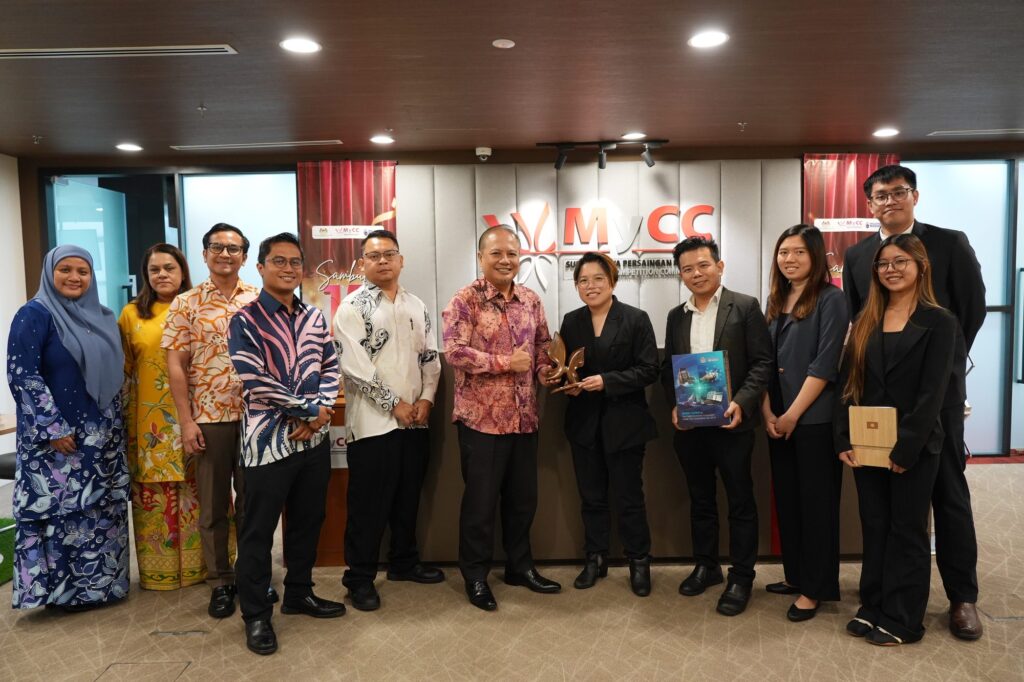
Have you ever wondered who ensures that businesses in Malaysia play fair? That’s where MyCC, or the Malaysia Competition Commission, comes in. Established under the Competition Commission Act 2010, MyCC is the independent body tasked with enforcing Malaysia’s Competition Act 2010, which is the primary legislation governing fair market practices in the country.

Do you know what is MYCC? Read More »

Lawyer Khoo Ai Theng Secures Major Win in Unfair Dismissal Case Against Heineken

In a significant victory for employee rights, senior legal practitioner Khoo Ai Theng successfully represented a former senior IT manager in a high-profile unfair dismissal case against Heineken Malaysia, resulting in the company being ordered to pay RM893,200 in compensation.

Lawyer Khoo Ai Theng Secures Major Win in Unfair Dismissal Case Against Heineken Read More »

Welcome to Messrs. Ng,Zainurul, Seke & Khoo (NZSK), CLICK to Whatsapp with respective lawyer in charge and we will get back to you as soon as possible! Thank You!
//
Contact Lawyer (NZSK)
Divorce, Industrial & Employment, Corporate Dispute, Construction Dispute, Debt Recovery, Probate & letter administration & etc
Contact Lawyer 咨询律师